NCAA Timeout Drama: Herb Sendek's Controversial Kentucky Loss Leaves Lasting Impact
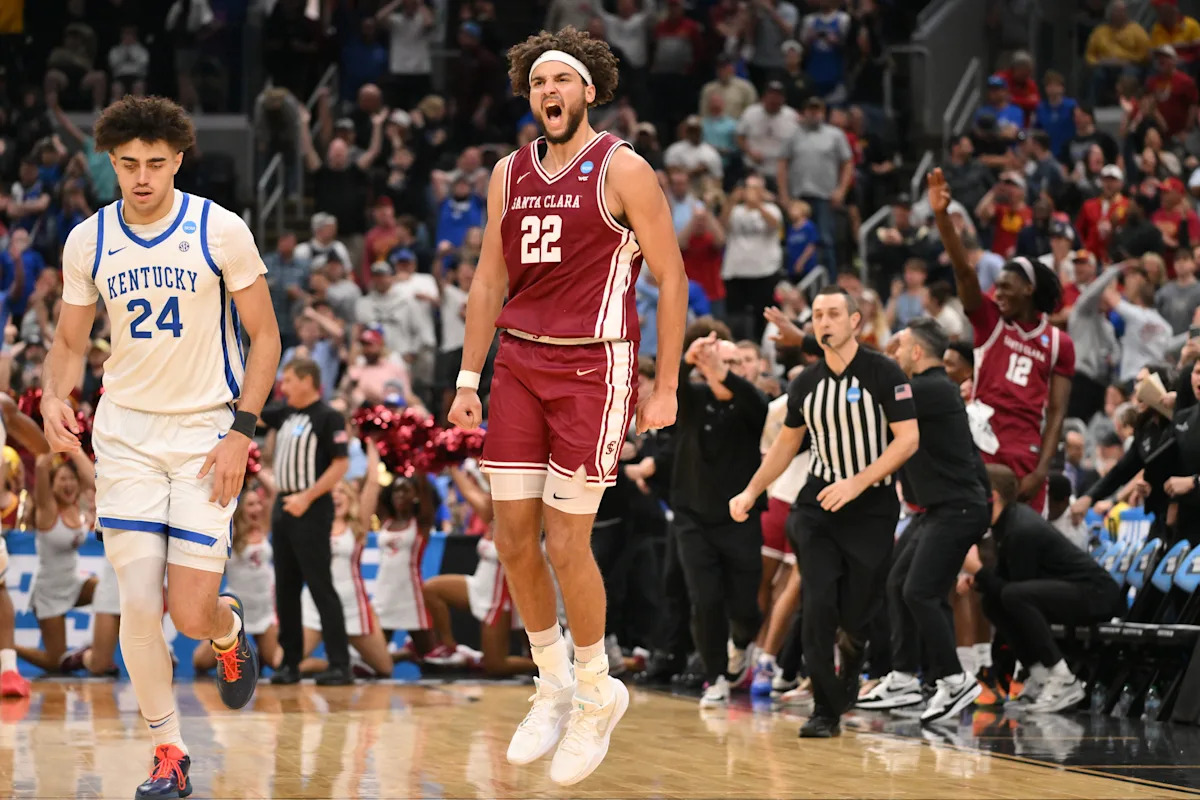
March Madness, the NCAA Men's Basketball Tournament, is a crucible where dreams are forged and shattered, often in the blink of an eye. For coaches and players, these high-stakes moments can define careers. Few narratives in recent memory encapsulate the raw emotion and controversial nature of the tournament quite like the first-round clash between the Santa Clara Broncos and the Kentucky Wildcats. At the heart of this dramatic encounter was Santa Clara's esteemed head coach,
Herb Sendek, whose "unequivocal" call for a timeout went unacknowledged, leading to a soul-crushing defeat. This incident didn't just end Santa Clara's historic season; it sparked a national debate about officiating, the human element of the game, and the fine margins that separate victory from heartbreak in college basketball.
The Heartbreaking Moment: A Timeout Unacknowledged
The scene was set for an epic upset. The No. 10-seeded Santa Clara Broncos, under the guidance of veteran coach
Herb Sendek, were locked in a fierce battle with the perennial powerhouse, No. 7-seeded Kentucky. With mere seconds ticking off the clock in the second half, Santa Clara forward Allen Graves drilled a clutch 3-pointer, putting the Broncos up by three points with a scant 2.4 seconds remaining. The energy in the arena was electric, with a historic upset seemingly within reach.
What followed, however, would become the subject of intense scrutiny and profound disappointment for Sendek and his team. As Graves' shot swished through the net, Sendek, a coach renowned for his meticulous preparation and strategic acumen, immediately signaled for a timeout. His intention was clear: stop the clock, set his defense, and ensure his team was perfectly positioned to prevent a last-second Kentucky miracle. "I unequivocally called timeout," Sendek later stated, emphasizing the clarity of his action.
Yet, despite Sendek's clear signal, the timeout was not granted by the officials. Kentucky, seizing the opportunity, inbounded the ball quickly. Wildcats guard Otega Oweh launched a desperate, near-halfcourt shot that remarkably banked off the glass and through the hoop as the buzzer sounded, tying the game at 73-all and forcing overtime. The momentum, which had been firmly with Santa Clara just moments before, swung violently in Kentucky's favor. In the ensuing overtime period, the Wildcats capitalized on their newfound life, ultimately winning 89-84, sending Santa Clara home in agony. The missed timeout call was not just a minor oversight; it was arguably the pivotal moment that reshaped the outcome of an NCAA Tournament game.
The Coach's Perspective: Herb Sendek's Stance and Strategy
In the aftermath of the gut-wrenching loss,
Herb Sendek addressed the media with a composure that belied the emotional turmoil his team was experiencing. His postgame comments were not an angry tirade, but a calm, logical, and firm assertion of what he witnessed. "I unequivocally called timeout... but they didn't grant it, and I think the video evidence is clear," Sendek explained, inviting anyone to review the footage. He further elaborated on the strategic necessity: "Anybody's able to pull it up, which is a likely response after Allen [Graves] hits the 3-pointer that the coach would be calling timeout to set the defense, which I tried to do, and I was successful in doing other than it wasn't acknowledged or recognized."
Sendek's reasoned approach is characteristic of a coach with a rich academic and coaching background. A valedictorian of his high school class and a summa cum laude graduate from Carnegie Mellon with a degree in industrial management, Sendek approaches basketball with a strategist's mind. His call for a timeout was not born of panic, but of a calculated effort to optimize his team's chances. In critical late-game scenarios, timeouts are invaluable tools for coaches to:
- Organize Defense: Allows a coach to specifically assign matchups, remind players of key defensive principles, and prepare for potential inbound plays.
- Disrupt Momentum: Can cool down an opponent who might be on a run or prevent them from getting into a quick offensive rhythm.
- Communicate Strategy: Provides an opportunity to draw up a specific play, whether offensive or defensive, for the final seconds.
- Psychological Reset: Gives players a moment to regroup, absorb instructions, and shake off any nerves or mistakes.
The unacknowledged timeout deprived Sendek of these crucial strategic opportunities, handing Kentucky an unimpeded path to that game-tying shot. While officiating is an incredibly challenging job, especially in the chaotic environment of March Madness, this incident serves as a stark reminder of the immense impact a single, missed call can have on the hopes and dreams of an entire team and coaching staff.
A Season of Triumph, An Ending of Controversy: Santa Clara's Journey
For the Santa Clara Broncos, the controversial loss to Kentucky was a particularly bitter pill to swallow, as it capped off a truly remarkable and historic season. Under
Herb Sendek's leadership, the Broncos finished with an impressive 26-9 overall record, including a stellar 15-3 mark in West Coast Conference play. This was a team that had defied expectations and built significant momentum throughout the season.
Perhaps most significantly, this marked Santa Clara's first appearance in the NCAA Men's Tournament in a staggering 30 years, their last bid coming during the 1995-96 season. The 26 wins achieved this season were also the most for the Broncos in any of Sendek's ten seasons at the helm, showcasing the significant progress and success he had cultivated. Players like Elijah Mahi, who led Santa Clara with 20 points in the Kentucky game, and Allen Graves, who hit that clutch 3-pointer, had poured their hearts into making this season special.
To have such a triumphant journey end in such contentious fashion, with the outcome seemingly hinging on an ungranted timeout, is profoundly difficult. It's a testament to the resilience of college athletes that they must process such a devastating end to a season that was otherwise filled with so much to celebrate. The incident underscores the fragility of success in sports and how quickly elation can turn to despair due to circumstances beyond a team's control.
Beyond the Buzzer-Beater: Sendek's Legacy and Resilience
While the Kentucky loss will undoubtedly be a poignant chapter in his career, it is crucial to view it within the broader context of
Herb Sendek's illustrious and enduring journey in college basketball. Born in Pittsburgh and a stellar student-athlete himself, Sendek has dedicated over three decades to coaching, accumulating a career record of over 600 wins across major programs. His stints include successful tenures at Miami (OH), NC State, and Arizona State, before taking the reins at Santa Clara.
Sendek's consistent ability to build competitive programs, adapt to different conferences, and develop young talent speaks volumes about his coaching prowess. He boasts multiple Coach of the Year honors, including MAC COY, ACC COY, Pac-10 COY, and most recently earning the WCC COY recognition, reflecting his sustained excellence. For more on his extensive career achievements, explore
Herb Sendek's 600+ Wins: A Legendary College Hoops Career. His reputation is built on meticulous preparation, a strong emphasis on fundamentals, and a calm demeanor that instills confidence in his players. This cerebral approach to the game, rooted in his academic background, has often earned him the moniker of one of the sport's more intellectual coaches. You can delve deeper into his intellectual journey and coaching philosophy by reading
From Valedictorian to WCC COY: The Intellect of Herb Sendek.
The controversial Kentucky game, while painful, is another example of the fine margins that define high-level competition and the human element inherent in every contest. Sendek has navigated countless high-pressure situations throughout his career, and his resilience in the face of adversity is a hallmark of his coaching character. This moment, though agonizing, does not diminish his legacy but rather highlights the passion and dedication he brings to every game.
Conclusion
The NCAA Tournament showdown between Santa Clara and Kentucky will forever be etched in the minds of those who witnessed it, particularly for
Herb Sendek and his Broncos. The unacknowledged timeout call, leading to Kentucky's game-tying buzzer-beater and eventual overtime victory, represents a powerful illustration of the razor-thin line between triumph and heartbreak in sports. While the sting of such a controversial loss will undoubtedly linger, it also serves to underscore the strategic depth and unwavering commitment of Coach Sendek. His composed handling of the situation, even amidst profound disappointment, reflects the integrity and professionalism that have defined his remarkable three-decade career. As the discussion around officiating and game-changing calls continues, Sendek's experience stands as a potent reminder of the profound impact a single moment can have on the dreams of dedicated athletes and coaches alike.